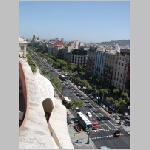
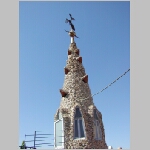
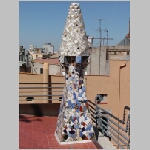
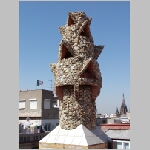
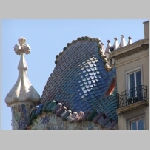
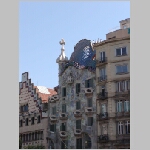
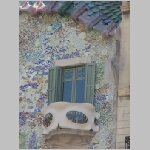
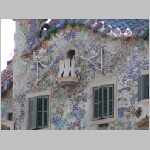
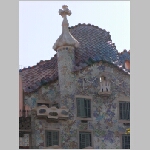
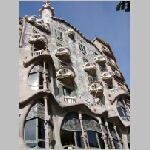
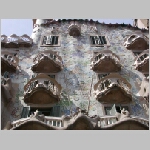
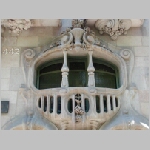
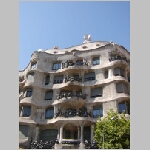
Here’s a detailed overview of Antoni Gaudí’s
Casa Milà (La Pedrera), synthesizing key information from the search
results:
Casa Milà (La Pedrera): Gaudí’s Modernist Masterpiece
Location: Passeig de Gràcia 92, Barcelona, Spain
Years of
Construction: 1906–1912
Architectural Style: Modernisme (Catalan Art
Nouveau)
UNESCO World Heritage Status: Listed in 1984 as part of
"Works of Antoni Gaudí" 11011.
Key Features & Innovations
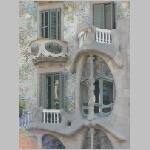
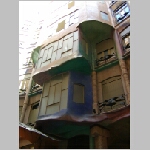
Organic Façade
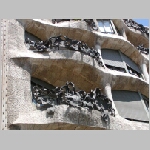
Nicknamed La Pedrera ("The Stone Quarry") for its
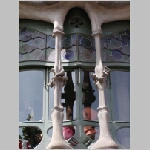
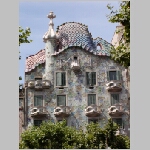
undulating limestone façade, resembling eroded cliffs or ocean waves.
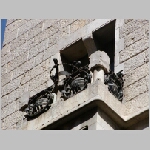
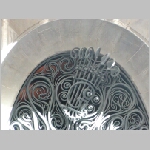
The self-supporting curtain wall (non-load-bearing) allowed Gaudí
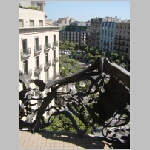
creative freedom with large windows and wrought-iron balconies made from
scrap metal 129.
Symbolism: Gaudí integrated Catholic motifs
(e.g., Rosary excerpts) and natural forms, though planned statues of the
Virgin Mary were omitted due to anticlerical tensions 19.
Structural Breakthroughs
No Load-Bearing Walls: Supported by iron
beams and brick pillars, enabling flexible interior layouts—a precursor
to modern open-plan designs 210.
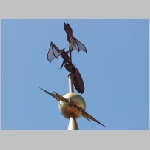
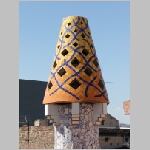
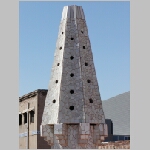
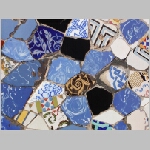
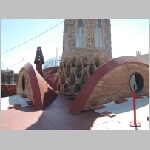
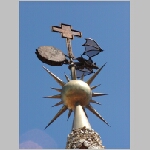
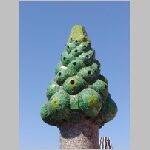
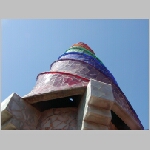
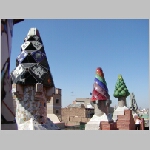
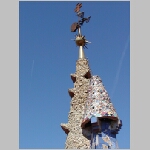
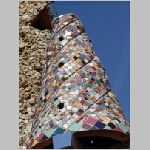
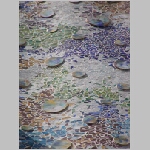
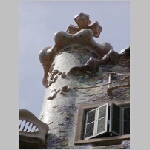
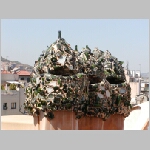
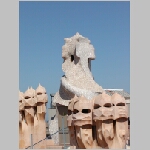
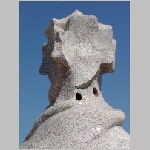
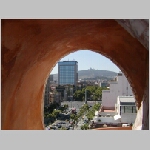
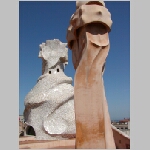
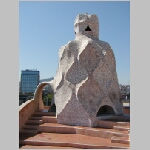
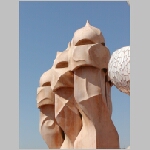
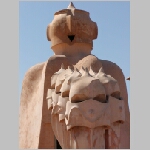
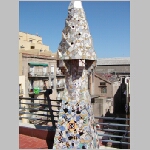
Rooftop Sculptures: The terrace
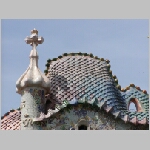
features surreal chimneys and ventilation towers nicknamed "witch
scarers," clad in broken marble and trencadís (mosaic technique) 711.
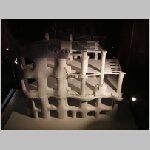
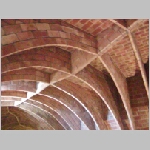
Attic of 270 Catenary Arches: A lightweight brick structure
resembling a whale’s ribcage, originally housing laundry rooms 29.
Functional Innovations
First Residential Garage: A basement
garage for carriages/cars, with iron columns inspired by bicycle wheels
211.
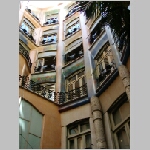
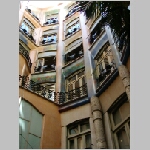
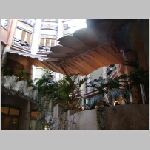
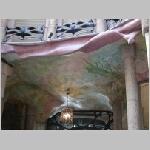
Natural Ventilation: Dual courtyards (Butterfly and Flower
Courtyards) maximize light and airflow, eliminating the need for AC 910.
Controversy & Legacy
Initially mocked for its unconventional
design (compared to a "zeppelin garage"), it later became a UNESCO
landmark 69.
Gaudí’s final civic project before dedicating
himself to the Sagrada Família 1012.
Visitor Experience
Highlights:
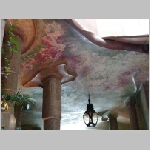
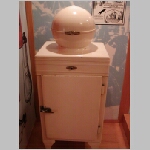
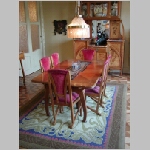
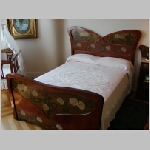
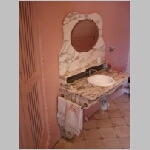
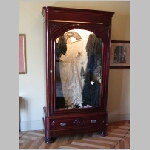
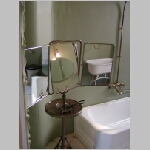
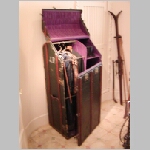
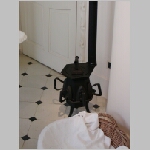
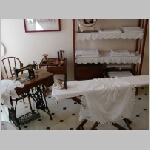
Recreated Apartment: Showcases bourgeois life in
early 20th-century Barcelona, with Gaudí-designed furnishings 211.
Espai Gaudí: Museum in the attic displaying models of his works
1113.
Night Tours: Audiovisual shows illuminate the rooftop
sculptures 1113.
Tickets: Options include daytime visits (with
audio guides) and exclusive sunrise tours 11.
Fun Facts
George
Lucas allegedly drew inspiration from the rooftop for Star Wars
stormtrooper helmets 6.
The Milà family refused to pay Gaudí’s
full fee due to the building’s controversy; he won the dispute in court
13.
A tapestry commissioned for the World Trade Center was
destroyed on 9/11 1. |
Die Casa Milà, besser bekannt als La Pedrera, ist eines der
Meisterwerke des katalanischen Architekten Antoni Gaudí und ein
herausragendes Beispiel des Modernisme. Das Gebäude wurde zwischen 1906
und 1912 erbaut und war das letzte private Wohnhaus, das Gaudí entwarf.
Es befindet sich im Herzen von Barcelona, an der Adresse Passeig de
Gràcia 92.
Architektur & Besonderheiten
Fassade: Die
wellenförmige Natursteinfassade mit ihren geschwungenen Linien und
schmiedeeisernen Balkonen verleiht dem Gebäude den Spitznamen „La
Pedrera“ (die Steinbrüche).
Innenräume: Die Räume sind flexibel
gestaltet und verfügen über zwei große Innenhöhlen, die für Licht und
Belüftung sorgen.
Dachterrasse: Das Dach ist mit skulpturalen
Schornsteinen und Lüftungsschächten versehen, die an Kriegerhelme
erinnern und einen atemberaubenden Blick über die Stadt bieten.
Innovationen: Zu den technischen Neuerungen zählen eine selbsttragende
Steinfassade und ein freier Grundriss, der zu dieser Zeit revolutionär
war.
Die Casa Milà ist ein faszinierendes Beispiel für Gaudís
innovative Architektur und ein Muss für jeden Besucher Barcelonas. Mit
ihren einzigartigen Formen und der Verbindung von Kunst und Technik
bietet sie ein unvergessliches Erlebnis
Antoni Gaudí First, the
genius behind them. Antoni Gaudí (1852-1926) was a Catalan architect
whose work is characterized by: Organic forms inspired by nature (bones,
plants, water, caves). Innovative structural solutions like the catenary
arch. Integration of crafts (ironwork, ceramics, stained glass).
Profound religious and symbolic meaning in his later works. His work in
Barcelona is a UNESCO World Heritage site. Casa Milà (La Pedrera)
Location: Passeig de Gràcia, Barcelona. Built: 1906-1912. This is
Gaudí's last civil work before dedicating himself entirely to the
Sagrada Família. Key Features & Significance: The "Stone Quarry" (La
Pedrera): The nickname, meaning "The Quarry," was given by critics who
disliked its unconventional, wavy limestone facade. It looks like a
cliff face sculpted by wind and water. Undulating Facade: The facade is
a continuous curve, with balconies made of wrought iron that resemble
seaweed or twisted metal, designed by Gaudí's collaborator Josep Maria
Jujol. Self-Supporting Stone Façade: The front wall is not
load-bearing—a revolutionary concept. The weight is carried by iron
beams and pillars inside. Innovative Floor Plan: The internal structure
uses pillars (not load-bearing walls), allowing for free and adaptable
floor plans. The apartments are arranged around two large, light-filled
interior courtyards. The Rooftop: Perhaps its most famous feature. It's
a surreal "warrior" landscape of stairway exits, ventilation towers, and
chimneys covered in trencadís (broken tile mosaic). These functional
elements are transformed into sculptural forms. Attic (Espai Gaudí):
Houses the remarkable "Catenary Arch" exhibition hall. A series of 270
catenary brick arches that support the roof, resembling the ribcage of a
giant animal. In short, Casa Milà is a radical, functional apartment
building that is also a total work of art, showcasing Gaudí's
architectural innovation and organic vision. How They Connect: Gaudí's
Evolution Casa Milà represents the peak of Gaudí's mature, organic style
in residential architecture. It takes the ideas he experimented with in
Casa Batlló (just down the street) to a more monumental and structurally
audacious level. Both buildings are part of Barcelona's "Block of
Discord" (Illa de la Discòrdia), a city block featuring competing
modernist buildings by different architects. Casa Batlló (Gaudí), Casa
Amatller (Puig i Cadafalch), and Casa Lleó Morera (Domènech i Montaner)
are all there. Casa Milà is a few blocks away. They show his move away
from straight lines and historical references towards a completely
original language inspired by nature's laws. Visiting Them Today: Casa
Milà (La Pedrera): Managed by the Fundació Catalunya-La Pedrera. You can
visit the spectacular rooftop, the attic with its exhibition, one
restored apartment (El Pis de la Pedrera), and the main courtyard.
Night-time light shows are also offered. Casa Batlló: Also open to the
public, with a stunning interior and rooftop. It offers a more
fantastical, colorful, and narrative-driven experience compared to the
structural monumentality of La Pedrera. In conclusion: When you mention
Gaudí and Casa Milà, you are pointing to one of the most revolutionary
apartment buildings ever created—a UNESCO-listed landmark that is not
just a house, but a sculpture, an engineering feat, and a direct
expression of Gaudí's unique genius. |
 Safaris
Bergsteigen
Wandern
Inselwandern Weltweit
Safaris
Bergsteigen
Wandern
Inselwandern Weltweit
 Chronologie
Inselwandern
Chronologie
Inselwandern Europa
Inselwandern
Europa
Inselwandern
 Städtewandern
 Paintings
 Dirk Rauschenbach

 Mail ccooly(
at) web.de
Mail ccooly(
at) web.de