 Safaris
Bergsteigen
Wandern
Inselwandern Weltweit
Safaris
Bergsteigen
Wandern
Inselwandern Weltweit
 Chronologie
Inselwandern
Chronologie
Inselwandern Europa
Inselwandern
Europa
Inselwandern
 Städtewandern
 Paintings
 Dirk Rauschenbach

 Mail ccooly(
at) web.de
Mail ccooly(
at) web.de|
Safaris
Bergsteigen
Wandern
Inselwandern Weltweit
|
Chronologie
Inselwandern |
Europa
Inselwandern
|
Städtewandern
|
Paintings |
Dirk Rauschenbach
|
Mail ccooly(
at) web.de |
 |
Machineelbaum Pigeon Island Guadeloupe Malendure Westküste Pigeonisland Guadeloupe #malendure #westküste #pigeon #island #of #guadeloupe #schleswigholstein #taube #travel #the #martinique #nordfriesland #germany #love #mode #nordsee #bird #beach #photography #handmade #westcoast #birds #nature #strasbourg #sommer #dove #sea #munich #mulhouse #hamburg, Machineel |
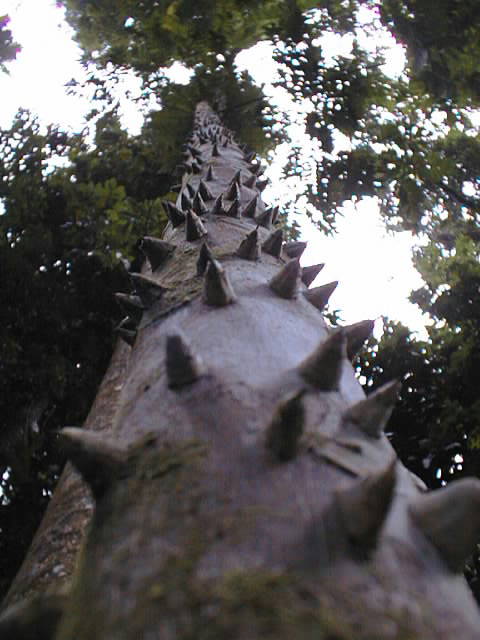
| Der Schmerzbaum oder, wie wir ihn in Chiapas kennen, Pochota (Ceiba
speciosa) ist eine Laubbaumart, die in den tropischen und subtropischen
Wäldern Mittel- und Südamerikas beheimatet ist und zur gleichen Familie
wie der Affenbrotbaum und die Ceiba gehört. Er ist resistent gegen Trockenheit und mäßige Kälte, wächst schnell, wenn es reichlich Wasser gibt, und erreicht eine Höhe von mehr als 25 Metern. Sein flaschenförmiger Stamm mit einem Umfang von bis zu 2 Metern ist mit dicken, spitzen, konischen Dornen bedeckt, die verhindern, dass wilde Tiere den Baum erklimmen. Der Stamm ist bei jungen Bäumen aufgrund seines hohen Chlorophyllgehalts, der die Photosynthese auch ohne Blätter ermöglicht, grün, wird aber mit zunehmendem Alter grau. Er ist der heilige Baum der Maya-Kultur. The Manchineel tree (Hippomane mancinella) is a highly toxic plant native to the Caribbean, Central America, and parts of South America. It is often regarded as one of the most dangerous trees in the world due to the extreme toxicity of its sap and other parts. Key Features of the Manchineel Tree:
Safety Warning:Due to its toxicity, the Manchineel tree is often marked with warning signs in areas where it grows. People are advised to stay away from the tree, not to touch it, and not to stand underneath it when it is raining, as rain can wash the toxic sap onto the ground. Historical and Cultural Significance:
While the Manchineel tree is not commonly found in urban areas, it is an important example of the dangers of certain plants in tropical and subtropical regions. It serves as a reminder to always be cautious in unfamiliar environments, especially in nature. Would you like to know more about its habitat or specific ways it has been studied? Here’s a detailed overview of the manchineel tree (Hippomane mancinella), one of the world’s most dangerous plants, based on the search results: 1. Overview
2. ToxicityAll parts of the tree are lethal:
Historical Poisoning Cases:
3. Identification
4. Ecological Role & Uses
5. Survival Tips
6. Cultural & Historical Significance
7. Conservation Status
|
 05.06.26 Copyright Dirk
Rauschenbach Koelnerstrasse 293 51702 Bergneustadt
Datenschutzerklaerung 02261 94417 oder
Handy oder Mail ccooly(
at) web.de
05.06.26 Copyright Dirk
Rauschenbach Koelnerstrasse 293 51702 Bergneustadt
Datenschutzerklaerung 02261 94417 oder
Handy oder Mail ccooly(
at) web.de